Pea Souper at Montrose Dairy

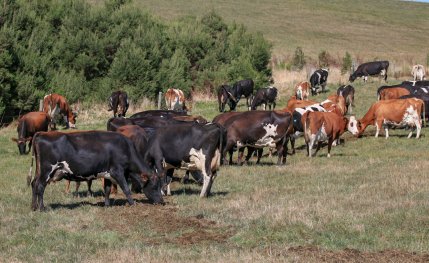
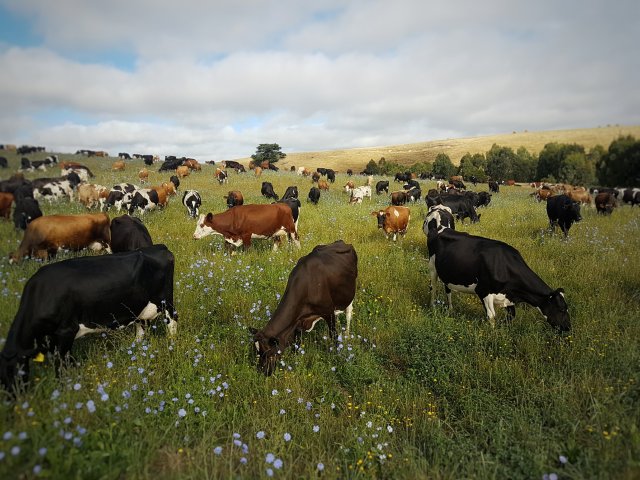
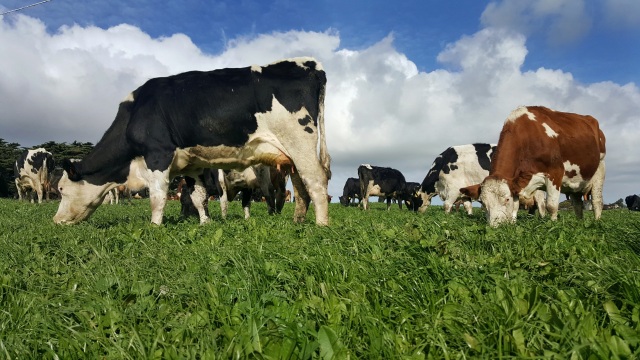
A foggy morning to finish off a soggy Autumn.

Posted in Cows, Dairy, Weather | Tagged , | 1 Comment

Setting up pastures for winter

Heading into winter it is critical we have lots of high quality pasture on hand, pasture growth rates decline as the days shorten and our soils cool down.

To manage our pastures we monitor the pasture cover in each paddock every 10 to 14 days at this time of the year.  Pastures are measured using an electronic meter to determine the kg of dry matter (kg DM) per hectare. The sensor is trailed behind our quad bike taking 200 measurements per second and matching the location of the measurements via GPS with the paddocks name.

The data collected from these measurements provides us with an understanding of how much feed we have available for our cows.  A feed wedge graph is created to identifying potential feed surpluses or shortages.

Paddock Name

The sloping line represents our desired pasture cover.  The cows are due to eat paddock 18 next and they have just come out off paddock 11, where they did a great job of eating what was offered to them. Today’s measurements show a slight pasture surplus, the average pasture cover for the farm today was 2413kg DM/ha, right where  we want going into winter.

Pasture growth rate and leaf appearance interval is monitored to ensure our pastures are getting an appropriate rest interval between grazings. For the last 12 days our growth rate has averaged 27kg DM/day and our ryegrass pastures are producing a new leaf approximately every 14 days.  We aim to graze pastures when each tiller has 3 leaves, giving us a desired grazing interval of 42 days.

This may sound like a complex approach to some thing seemingly simple like growing grass. Our pastures are integral to our business, with out grass we have lots of hungry cows, it is a case of look after the simple things and many other parts of the operation fall into place.

Posted in Agriculture, Cows, Dairy, Milk, Pasture, Technology | Tagged , , , , , , | 5 Comments

Farm Day

Farm Day is on Sunday!  We are looking forward to meeting the city family we will host for the day at Montrose.

We have taken part in Farm Day for several years and really enjoy helping an interested city family understand what goes on behind the fences of a modern farm.

In the past, many city dwellers had an immediate family member in the country who they visited regularly to experience life on the land.  With farmer numbers declining this is not so common now.

We enjoy the questions, squeals of delight and watching the kids run through the grass (often mud!) or interact with our animals.  It is always interesting to find out what was expected and what surprises the visiting family about our farm – the latter is often about the technology we use or how similar the family we host is to our family!

884 aka ‘Old Mama’ has been welcoming Farm Day visitors to our farm for the last 5 years. She has been feeling a little down in the ears this week with a case of mastitis. Hoping she is back in good form to welcome this years visitors on Sunday.

Posted in Agriculture, Community, Education | 1 Comment

Milk now and mud later??

Gateway mud is a reminder of what can happen to the entire farm if pastures aren’t protected

Recent heavy rains have forced us to evaluate how we approach the next six weeks on our farm.

Our herd is due to start calving on the 12th of next month and in order to give the cows a break before they calve we stop milking cows around 55 days before their due date. This means each week for the next 8 weeks a mob of cows is removed from the miking herd and placed in a mob of cows away from the dairy. This is what dairy farmers call ‘drying cows off’, these cows with return to the milking herd once they have given birth to their calves.

We calve our entire herd down over a 10 week period, this is a very busy time for us, this is called a ‘seasonal calving’. Some farms have two calving periods that’s called ‘split calving’. Some have many calving periods that is commonly called ‘batch calving’ and some calve all year round.

We choose to have one calving period so we can match the cows feed requirements with our grass growth, we have a strong focus on feeding grass to our cows.  One calving period also means we can focus on one main activity on the farm at a time, our calving period is busy and very intense but we can see the end of it and we get a short quieter period before we focus on the next task.

Farms which have one calving period have tradionally had a lower cost of production and are often farms which have part of their production exported. Whereas farms which supply milk to the domestic market need to maintain supply throughout the year and often calve year round or batch calve.

So due to our recent heavy rain, instead of drying off a few cows a week over the next seven weeks, during the next 10 days we will dry off our entire herd. This will also enable us to protect our valuable pastures around our dairy.  The dry cows can be moved to drier  pastures at the far end of our property which aren’t grazed by the milking herd. Drying the remained of the herd off in one go will mean the cows due to calve late in our calving period will get the bonus of a longer holiday. 

This will also mean we will have a period of no milk production in late May early June when milk is worth the most for us to sell.  This plan is not set in concrete yet and we will evaluate how our pastures dry over the next few days. It is critical we do all we can to protect our soils and pastures, we don’t want to make the mistake of chasing  high value winter milk at the detriment of next season.

Posted in Dairy, Dairy Farming, Milk, Pasture | Tagged , , | 3 Comments

Nuffield Scholarships offer a chance of a life time.

Nuffield Australia scholarships applications are now open for 2013. I was lucky enough to be awarded a scholarship in 2010. It was an incredible year of learning and I made many life long friendships.

Any Australian primary producer should consider the opportunity, check out the Nuffield Australia web site. Nuffield scholarships are also available in New Zealand, UK, Ireland, Canada, France and the Netherlands.

The Nuffield Australia web site has a great list of scholar’s blogs.  While these blogs are fantastic for a bit of armchair traveling they are also a great opportunity to learn from the scholar’s experiences.

The video above is mainly a collection of a few of my experiences during my Nuffield travels with Middle East, Paris & Mongolian contributions from Christine Ferguson, Asparagus from Balls and Future leader from Rowan Paulet.

Posted in Agriculture, Community, Dairy Farming, Education | Tagged , , , , , , , | Leave a comment

Grazing under the stars.

One of the many fringe benefits of living in the country is the night sky we get to enjoy. For several weeks now the evening sky has been dominated by Jupiter setting in the west.  This is tonight’s display for our cows to enjoy.

Posted in Dairy, Environment | Tagged , , | 6 Comments

Autumn sets in

The weather for the last 6 months here at Hoddle has been fantastic for growing grass with a very mild summer and just enough rain to keep the grass ticking along.  With the deciduous trees losing their leaves and a typical foggy autumn morning, the season is changing.

It is time for our cows to start their annual holiday when they get to have a break from milking for around 7 weeks before they calve. The first of the herd is due to calve in early June.


Posted in Cows, Dairy, Dairy Farming, Weather | Tagged , , , | Leave a comment